
Teach Your Kids with Enhanced Soma Blocks
Teach cubes, shapes, edges, width, height, depth etc.

Build many creative shapes and recording the constructs
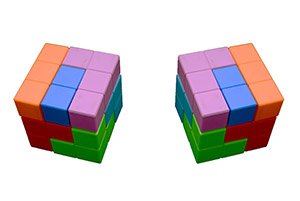
Learn advanced concepts: Rotations and Symmetries
There are limitless creative applications and uses of the Soma set. It is only one’s creative abilities that define what could be done with the Soma set. Play with your kids to teach various lessons with an enhanced Soma Set.
Learn unit cube, blocks, edges, wideth, depthm height and faces with Soma Set
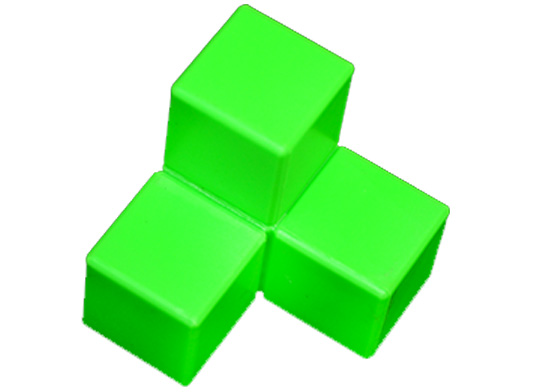
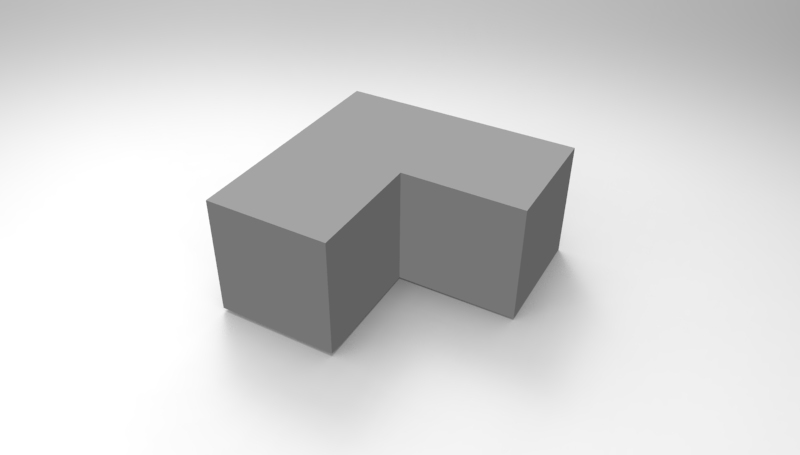
Unit Cube- A cube is the smallest unit of a block, hence the name Unit cube.
On the image on your right, you can see 3 Unit cubes (coloured in light gray, dark gray, black) forms Soma block.

Block (or Piece) - A block is a formation of either 3 or 4 Unit cubes.
Six (6) Soma blocks have 4 unit cubes each, while Soma block 1 has 3 unit cubes.
The seven Soma blocks have 27 Unit cubes in total.


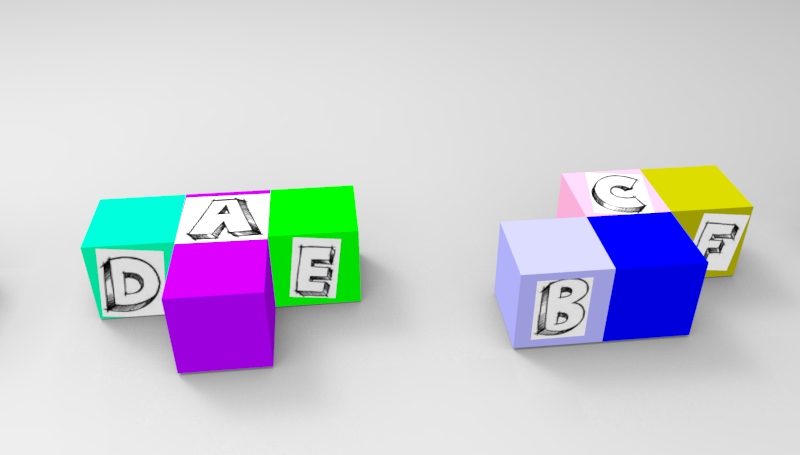
If you move one full circle around these two blocks, the faces, corners and edges that you see will change with respect to the view point.
From a given viewpoint, certain faces, corner points and edges may be visible while some others may not be visible.
Let's learn width, height, and length.
A block, a formation and the Soma Cube are 3D objects. This means it has both shape and volume. An accurate way to visualize this is to observe the width, depth and height Soma blocks and formations.
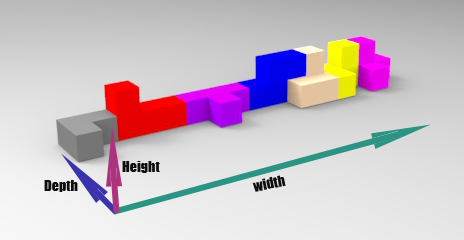
Keep the Soma blocks as shown in the following image
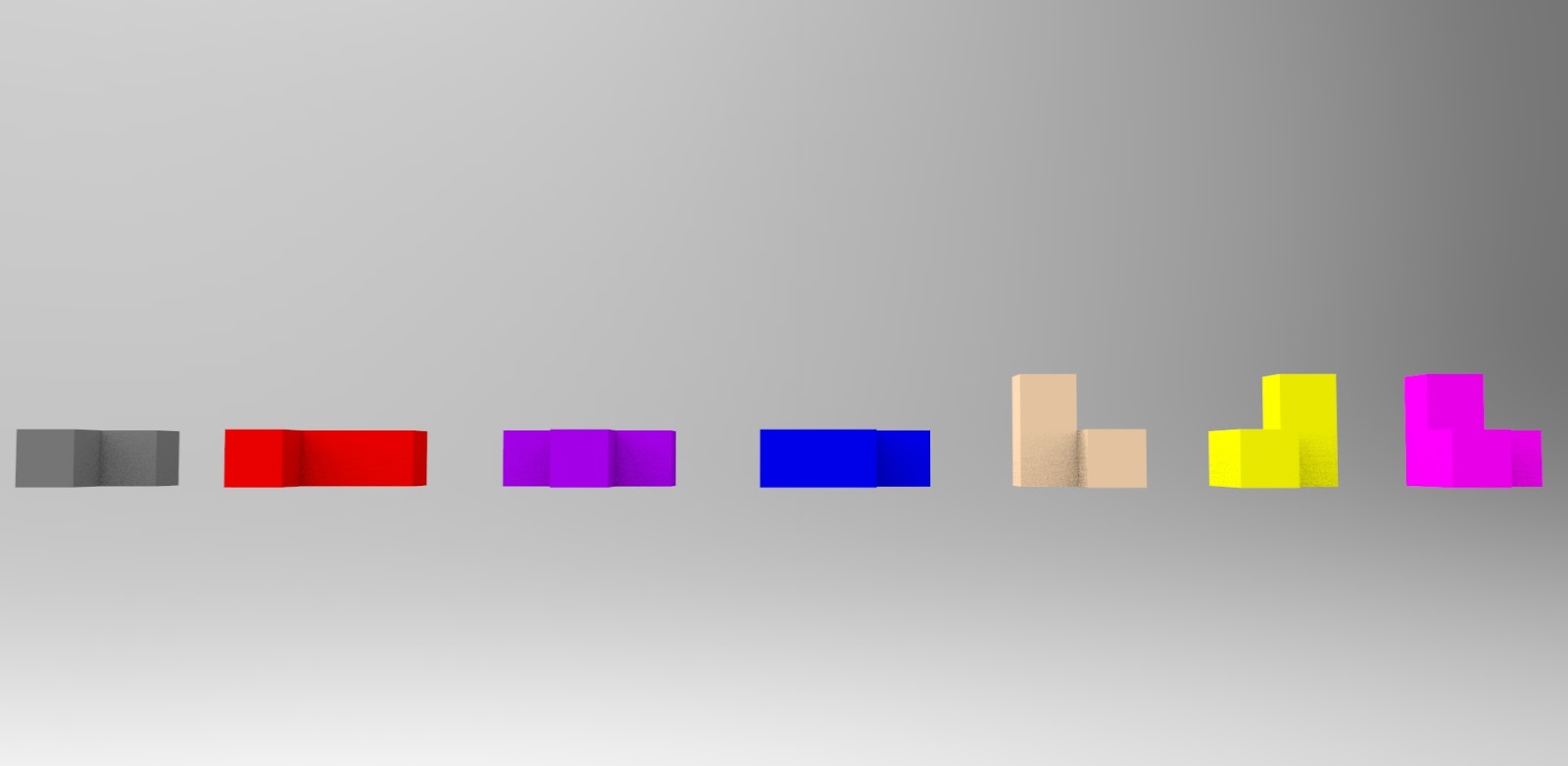
Unit Cubes
How many unit cubes are there in each block?

Block 1 has 3 unit cubes and all the other 6 has 4 unit cubes each.
Total unit Cubes
How many unit cubes are there in all 7 blocks?
There are 27 unit cubes.
Identify similarities
Can you identify two similar blocks?
No. There are no two similar Soma blocks. Soma block 5 and 6 look similar, but not identical. One is the mirror image of another. One is curved to left and the other one to right.
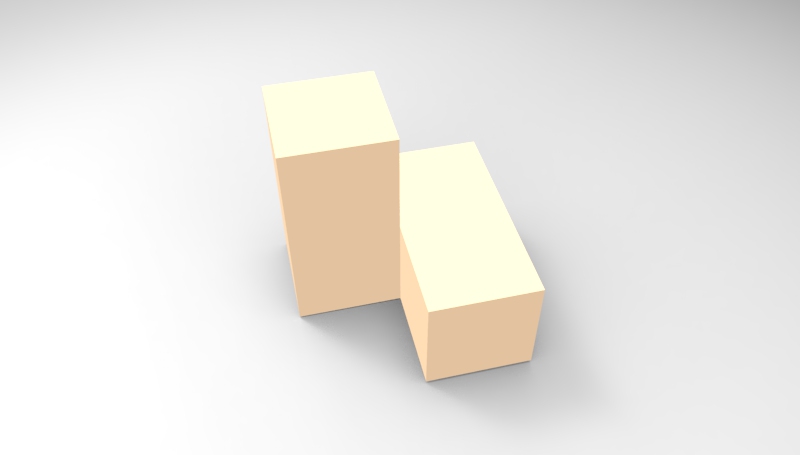
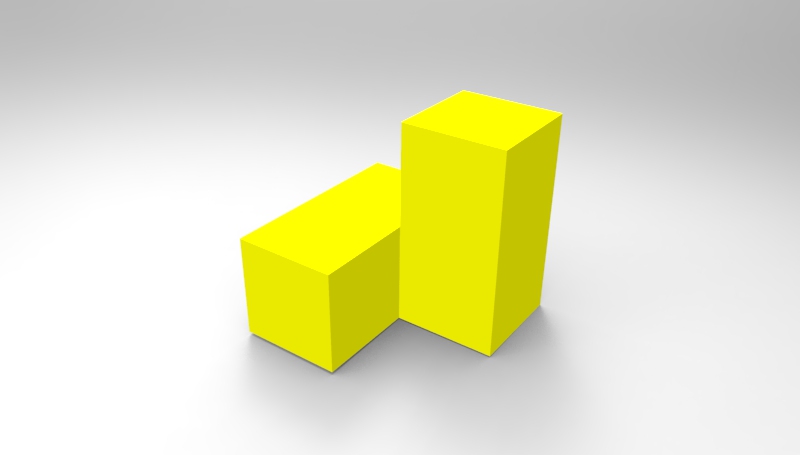
Resembling
Can you identify blocks which resemble the letter small ‘L’ ,big ‘L’, and ‘T’ and ‘Z’?
| T | 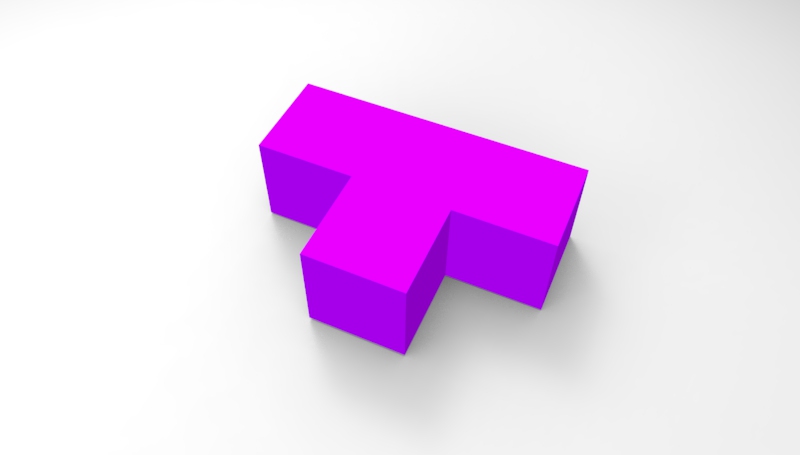 |
| Big L | 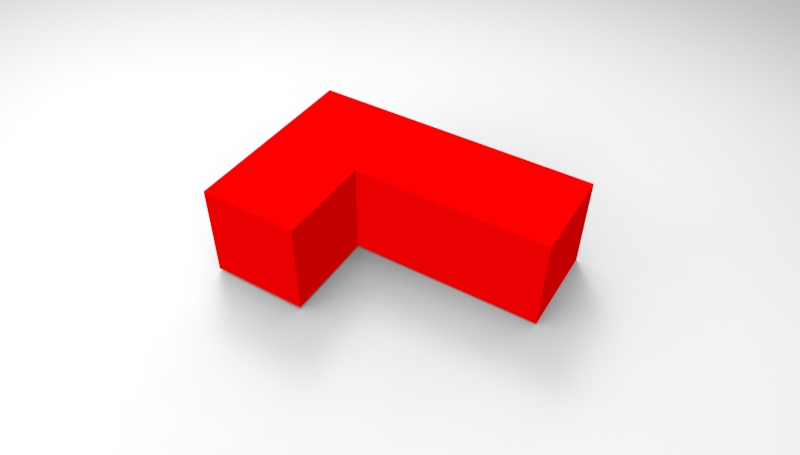 |
| Small L | |
| Z |  |
Identify edges, faces, corner points
Identify the number of visible faces, edges, and corner points
Faces = Edges = Corner points =
Arranging Blocks
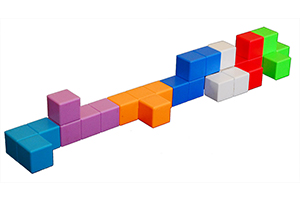
Let’s arrange the seven blocks in one single row on a table, without the blocks touching on their surfaces. Now turn the blocks such a way that that the maximum number of faces of unit cube (of each block) touches the table surface. In other words, a maximum area of the table surface is covered by the seven soma blocks.

Arranging Blocks 2
While keeping the above condition (i.e. maximum number of faces of unit cube touches the table surface.) fulfilled, now turn the blocks such a way that that the maximum number of faces of unit cube (of each block) touches the table surface. In other words, a maximum area of the table surface is covered by the seven soma blocks.
Before solving puzzles you need to identify each block. There are various ways to label the blocks as shown below.
The following learning activities are to learn unit cubes, edges, vertices, surface,height, width, and depth of Soma blocks.
Let's learn characteristics of Soma blocks. Here, you will learn unit cube - the building blocks of Soma blocks and characteristics of Soma blocks.
Arranging blocks 3
|
2 |
|
2 |
|
3 |
|
2 |
|
2 |
|
2 |
 |
3 |
|
1 |
|
1 |
|
1 |
|
1 |
|
2 |
|
2 |
|
3 |
Here let us discuss arrangements using two or more blocks.
In all the arrangements considered, Soma blocks are placed on a table such that a face completely touches the table. Arrangements where blocks are resting on its edges are not considered.
The blocks could be placed (with respect to each block) in the following ways.
Incorrect formation


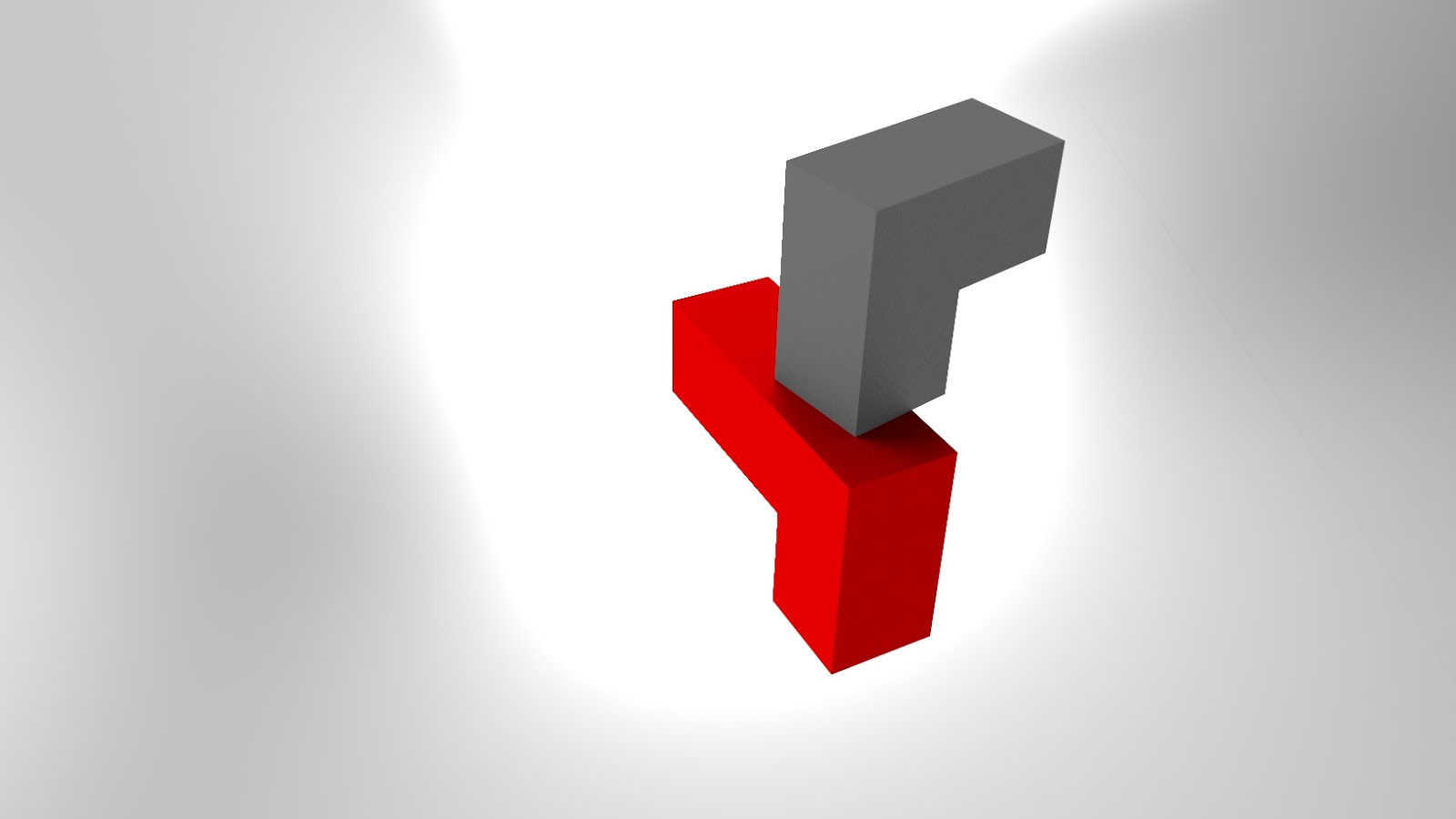

The correct formation

The main activity of using Soma is building shapes by using two or more Soma blocks. Shapes are also called formation, combinations, constructions, or placements.
When building shapes, a simple condition must be fulfilled. This condition is known as face to face touching.
To meet this condition when 2 blocks are used, at least the full face of one unit cube (of the blocks) must completely touch the full face of a unit cube of the other Soma block as shown below.
Build many creative shapes and recording the constructs
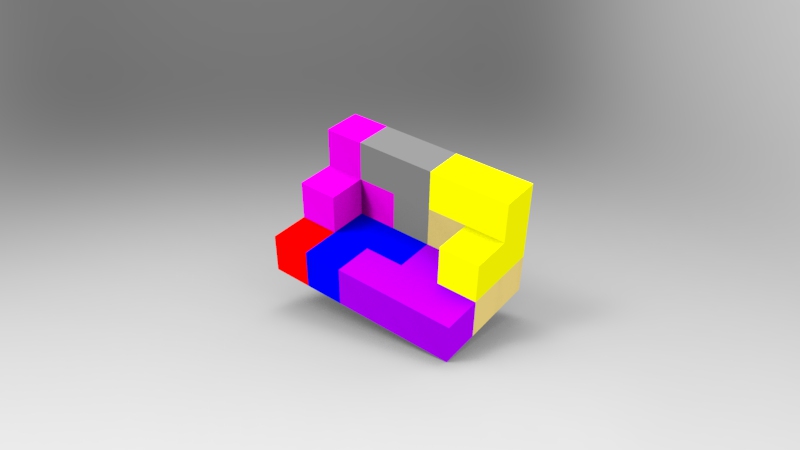
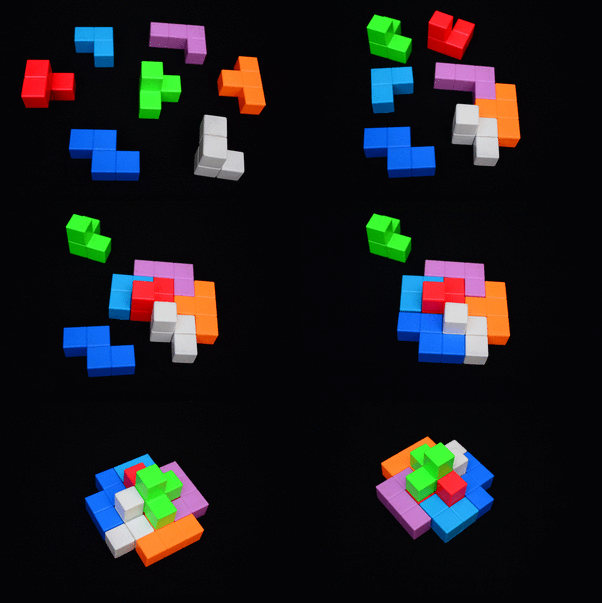
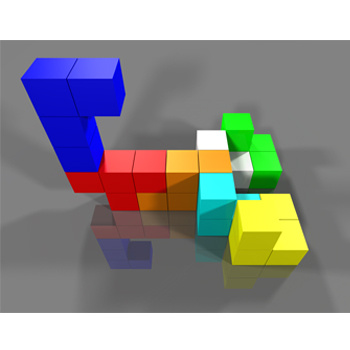
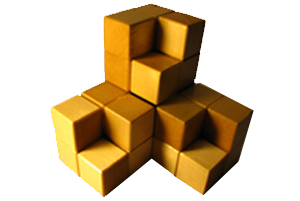
There are many designs that could be made with one Soma Set. These include architectural shapes, interior designs, and decorative items. Further shapes can be built with multiple Soma Sets.
With special thanks to Stevica Kronic from Maribor in Slovenia two PDF e-books with many possible Soma shapes with and without notations could be found here.






How to make a Soma Cube from Sonobe Cubes